If your storage fills up in No Such Place, do not sell every piece of junk immediately. Build more boxes, keep a small reserve of unusual materials for future tasks and furniture, and use the correct buyer: items with the URC research-value marker can be sold at the base URC terminal, while items without that marker generally cannot be sold there. Those unsellable items may still be useful as equipment, lottery inputs, or trade goods with map merchants.
Expand storage early
You can craft storage boxes relatively early. While exploring, collect wood, scrap metal, and metal fittings instead of treating them as worthless clutter. These materials are commonly available and can be turned into additional boxes, which is usually a better long-term solution than repeatedly discarding items just to make room.
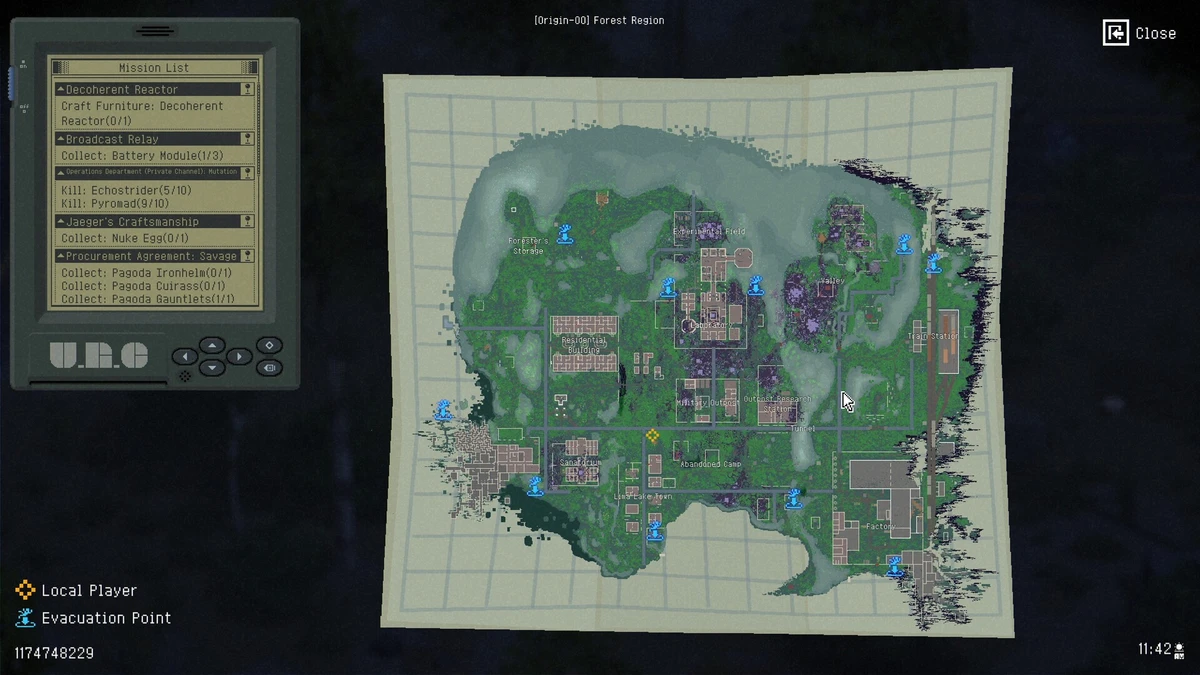
When you need materials for upgrades, a resource run to the factory can help. The factory area can provide threaded steel and minerals, and the furnace in the lower-right part of the factory is used for smelting. This route is dangerous because Leaf Five Dogs guard the area, so do not assume that a quick material run is safe if your character is poorly equipped.
What to keep and what to sell
- Keep three to five copies of small items that do not stack. This gives you a reserve without allowing every spare slot to fill with duplicates.
- Keep stackable materials whenever possible. Later missions and furniture crafting may require items that initially look unimportant.
- After completing a task that uses a particular material, sell the excess as a batch rather than selling each piece as soon as you find it.
Use the correct selling method
The base URC terminal is intended for recovering research-related materials. Check an item's marker before attempting to sell it: the research-value icon identifies goods that the terminal accepts. Items without that icon are generally not terminal-sellable, so a failed sale does not necessarily mean the item is useless.
Alternatives for items the URC terminal will not buy
- Weapons: Keep some good rifles, and consider retaining useful weapon parts or weapons that can serve as bases for corruption-related equipment.
- Lost Mirror Cabinet: Some unwanted items can be placed in the cabinet for a random draw. This may produce a reactor or accordion, which can help with a difficult later mission.
- Map merchants: Carry unwanted gear or other non-terminal goods to a merchant on the map and exchange them for biomass. Biomass functions as currency for buying corruption equipment and mission-related items, and can be valuable when you urgently need supplies.
A simple loot routine
- Reserve slots for quest materials and stackable resources.
- Collect box-making materials during normal exploration.
- At base, identify URC-marked goods and sell only surplus research items.
- Store a limited reserve of unstacked materials and keep stackable materials until relevant tasks are finished.
- Redirect weapons and non-terminal goods to equipment use, the Lost Mirror Cabinet, or a map merchant instead of discarding them automatically.